


Vitamin and Mineral Supplements: Exploring the Benefits & Differences
Vitamin and mineral supplements may often be used by individuals who are looking to promote overall health. Before taking dietary supplements that contain these essential nutrients, it is important to consult with your physician or nutritionist to determine which, if any, are right for you. Remember, supplements are exactly that: they exist to supplement any nutrients you may not receive adequate amounts of from the foods you eat. A well-balanced diet that contains a variety of healthy foods should provide you with most of your vitamins and minerals.
In this guide, we’ll break down exactly what vitamins and minerals are, and how you might responsibly incorporate dietary supplements into your regimen.
Macronutrients vs. Micronutrients
Macronutrients in your diet include carbohydrates, fats, and proteins: organic compounds the body needs to function normally. The body does not produce macronutrients on its own, and therefore must obtain them in large quantities (hence the prefix macro) from the foods you eat. A well-balanced diet contains an array of complex carbohydrates, healthy fats, and lean protein.
Approximately 96% of the human body is made up of the elements oxygen, carbon, hydrogen, and nitrogen. The remaining 4% encompasses small amounts of various other elements on the Periodic Table. Elements that are present in larger amounts within that 4%--as well as those four principle elements--are known as macronutrients. The macronutrients in our food, carbs, fats, and proteins are primarily comprised of these elements. Elements that appear in very small amounts, typically measured in parts per million or less, are called micronutrients.
Both macro and micronutrients perform a wide variety of functions in the body; virtually every bodily process or chemical reaction is driven by nutrients. Each plays its own role, but together, they promote optimal health and overall well-being. Vitamins and minerals, which are mostly comprised of more than just those four principle elements, can either be classified as macro or micronutrients, depending on their levels in the body.
What are Vitamins?
Vitamins are substances that are vital to promoting the normal growth and development of your body. They vary widely in function, benefits, and their sources, but each are necessary to maintain your general health. The 13 vitamins your body needs include:
Each vitamin benefits the body in a specific way. Some, like vitamin C, are antioxidants, while others, like vitamin D, may help to promote healthy bones. Vitamins also come from a wide variety of food sources, from fruits and vegetables to meat, grains, and even sunlight. Because of the incredible diversity of vitamin sources and functions, it is important to examine each individually. Our guides to essential nutrients may help.
What Are Minerals?
Minerals are naturally occurring inorganic substances. The body needs certain minerals to function normally; your cells require some minerals to carry out certain metabolic processes. Minerals also play a role in maintaining healthy bones, promoting normal muscle function, and supporting heart health. Some minerals, like potassium, are electrolytes: they are used to help regulate nerve and muscle function. As with vitamins, minerals have very specific functions, and you should evaluate each on its own to assess potential benefits.
Some minerals are required in larger amounts. These are called macrominerals, and they include calcium, phosphorus, magnesium, sodium, potassium, chloride, and sulfur. On the other hand, trace minerals are only needed in very small amounts. These include iron, copper, iodine, zinc, cobalt, fluoride, selenium, and manganese.
Vitamin and Mineral Supplements: Why Take Them?
Dietary supplements containing servings of various vitamins and minerals, when taken strategically, may become a beneficial part of your daily regimen. When considering a dietary supplement, it is important to remember that most of the nutrients your body needs can be obtained through their natural food sources. Dietary supplements should always serve to supplement your diet when you’re not receiving adequate amounts of a particular nutrient.
Not everybody needs a dietary supplement. Some nutrients in excess levels may actually do more harm than good. Before adding a dietary supplement to your routine, consult with your physician to identify which nutrients you’re not receiving enough of through diet alone, and which specific dietary supplements might be right for your needs.
For many people, however, dietary supplements may promote optimal health and provide a variety of certain health benefits. People who may benefit from taking a vitamin or mineral supplement include:
- Individuals with certain dietary restrictions.*
- Active individuals who may require an increased intake of nutrients to fuel their heightened activity levels.*
- Older individuals whose bodies are no longer as efficient at absorbing nutrients.*
- Vegans or vegetarians, who may be lacking in nutrients provided by meat or animal products.*
Finding the right supplement is a wholly individual choice that should ideally be informed by education and professional advice. If you’re looking to transition to a healthier lifestyle, TLS® Weight Management Solutions may be able to help.*
TLS® has revolutionized the way people think about managing their weight and eating right. It’s more than just a weight management system: it is a transformative, well-rounded approach to healthy living. The TLS® program not only promotes a healthy diet, it promotes overall lifestyle improvement through exercise and transforming your behavior by reinforcing good habits and fostering a positive mindset. TLS® uses a four-pronged approach to prepare you for healthier living:
- Low-Glycemic Eating: emphasizing healthy foods that support normal blood sugar, promote metabolism, and help you lose fat.
- Body Composition: focusing on exercise that not only burns body fat but preserves lean muscle mass.
- Education: teaching you the most integral aspects to healthy living and empowering you with the knowledge you need to transform your lifestyle.
- Science-Based Supplementation: supplementing your diet with some of the best products on the market, supporting your other efforts to eat right, support your metabolism, and boost energy.*
You can learn more about this innovative approach by checking out the TLS® Health Guide & Journal. For now, let’s take a closer look at science-based supplementation.*
The TLS® program suggests various dietary supplements that can be used short-term or long-term, depending on your individual needs and goals. By choosing which of these supplements best fit your profile, you can customize the way you receive your essential nutrients, including:
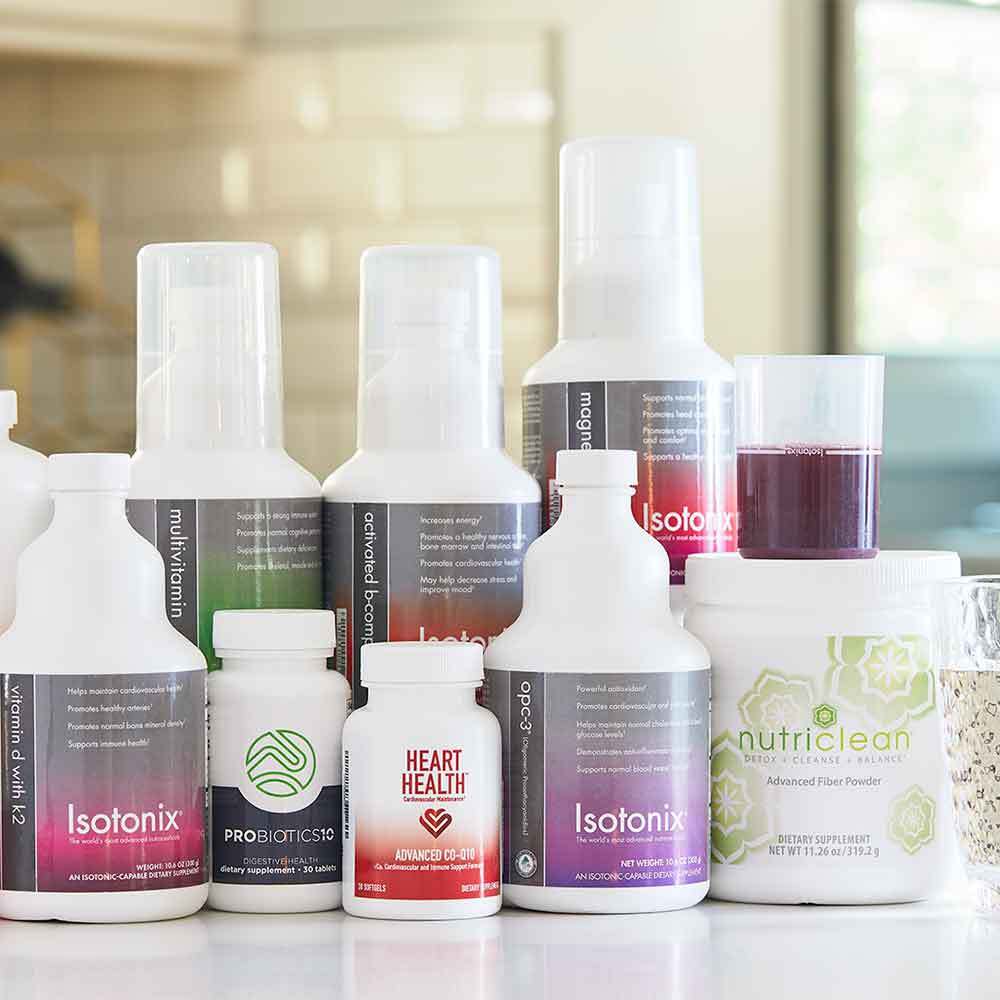
- The Isotonix® Multivitamin, which contains 100% or more of the daily value of important vitamins like A, C, E, D3, and the entire B-Complex. It also includes supporting minerals like calcium, magnesium, potassium, and more.*
- The Isotonix® Activated B Complex contains the metabolically active form of all eight essential B vitamins, as well as potassium and magnesium. Both the Activated B Complex and the Multivitamin are delivered via an isotonic-capable solution. When mixed with the right amount of water, these vitamin supplements become isotonic: they bear the same chemical concentration as the body’s own fluids, which promotes the efficient absorption of nutrients.*
- Heart Health Essential Omega III with Vitamin E contains 3,000 mg of omega 3, healthy polyunsaturated fats derived from fish oils that may support heart health.*
- NutriClean® 7 Day Cleansing System: a blend of herbs, nutrients, and botanical extracts--to promote optimal health by detoxifying your liver.*
- Isotonix OPC-3®: one of the most powerful antioxidant supplements on the market, containing Pycnogenol, the extract of the maritime pine tree’s bark.*
*These statements have not been evaluated by the Food and Drug Administration. This product(s) is not intended to diagnose, treat, cure or prevent any disease.
Sources
“Vitamins.” MedlinePlus, U.S. National Library of Medicine. Web. 01 Dec. 2017.
“Minerals.” MedlinePlus, U.S. National Library of Medicine. Web. 01 Dec. 2017.
Johnson, Larry E. MD, PhD. “Overview of Minerals”. Merck Manual Consumer Version. Web. 01 Dec. 2017.
Schirber, Michael. “The Chemistry of Life: The Human Body”. Live Science. 16 Apr. 2009. Web. 01 Dec. 2017.
Wilson, Debra Rose, PhD, MSN, RN, IBCLC, AHN-BC, CHT. “Do You Need to Take Vitamins?” Healthline. 90 Jul. 2016. Web. 01 Dec. 2017.

Thanks for signing up for email deals!
We'll send the emails to
Happy shopping!
Close
Close

Do you want extra cash in your wallet?
Earn $5 in cash on your first purchase plus a 20% off coupon when you sign up today!
expand_circle_down
There was an error registering your provided email.

The Digital
Wallet That
Pays Cash Daily



Here’s a wallet-warming gift for you.
$5 cash reward: Order $25 or more to redeem
Use code FIRST20OFF to save 20% on your first order 😍
Copy and paste the code at checkout.
Terms & Conditions | Terms of Use | Privacy Policy
Save 20% off your first order of SHOP.COM exclusive brands with coupon code. To earn a $5 cash reward, a $25 minimum purchase is necessary. You will automatically be enrolled in the Cashback program and agree to our Terms & Conditions.